
By Bob Boilen
WOWD Program Director Bob Boilen writes about the importance of public radio music amid looming cuts.
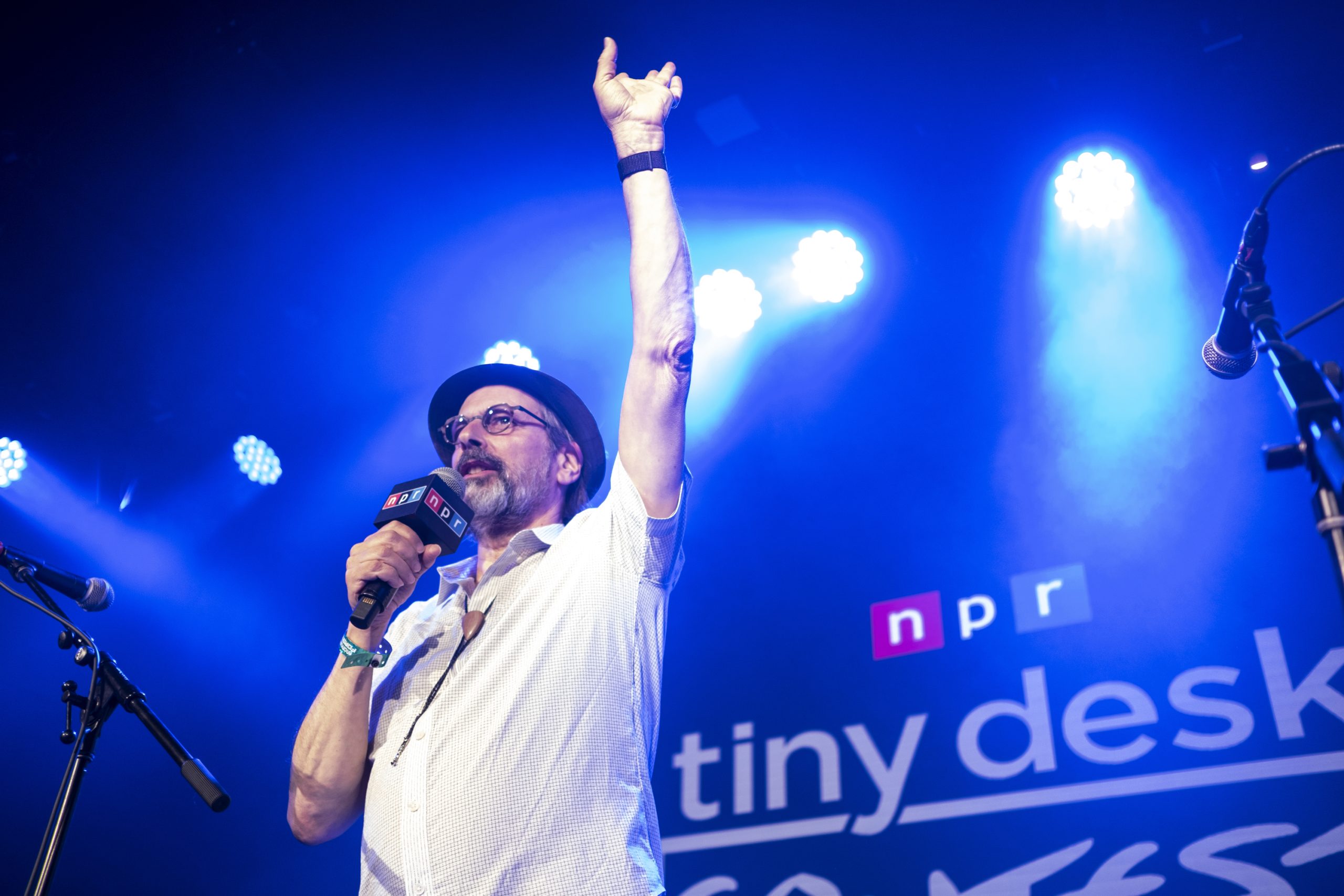
Bob Boilen speaking at an NPR Music event in Austin, Texas (Lizzie Chen/NPR).
By July 18th, 2025, Congress will vote on rescinding funds from the Corporation for Public Broadcasting (CPB). Much of the discussion centers on NPR’s news programming, but there has been little to no discussion on the effects on noncommercial public radio music stations and the music played on NPR’s shows and podcasts.
Here’s what you need to know.
The Corporation for Public Broadcasting manages the licensing of music for noncommercial public radio stations. Without federal funding for CPB and CPB’s management of these music licenses, public radio stations will not be able to play any music of any genre on the radio or stream on the internet. Noncommercial music stations across the country could go silent.
CPB’s role in securing music licenses is a matter of existential importance for noncommercial public radio. I spent 18 years directing NPR’s All Things Considered and produced hundreds of music stories featuring emerging artists, as well as playing interstitial music on the news program. As creator and host of All Songs Considered for 23 years and Tiny Desk Concerts, I have heard from thousands of emerging musicians and listeners about the crucial role public radio plays in their careers and their listening passions.
More than 23 million listeners tune in to 687 public radio music stations across all genres. It would affect almost all programming, including AAA music stations that feature genres such as independent rock, bluegrass, folk, jazz, gospel, country, soul, hip-hop, local music, as well as the broadcast of symphonies and concerts on the radio. 96% of all classical music is played on public radio stations. Public television programs that feature music, including children’s educational programs, will be affected.
Almost all archival stories or programs that use music will need to be removed from websites or apps across all stations or national producers. The effects on public radio stations will be devastating.
Marta McLellan Ross, Senior Vice President of Government & External Affairs at NPR, exclaims that “Public radio provides music to all Americans, regardless of their access to technology or their ability to pay for music streaming services. Public media music programming is free. It does not require listeners to have a credit card, give up their personal data, or sit through targeted advertisements, offering music consumers a rare advantage.”
In a statement about the rescinding of CPB funding and its impact on music stations, NPR’s CEO Katherine Maher stated it would result would be “a severe curtailing (if not elimination) of public radio music stations who depend on CPB to negotiate music licenses, reduction in service areas for rural and remote communities, as well as forcing dozens of local stations to shutter operations. Rescission would irreparably harm communities across America who count on public media for 24/7 news, music, cultural and educational programming, and emergency alerting services.”
If the funding from the Corporation for Public Broadcasting were rescinded, NPR and all local public media stations would need to negotiate licenses individually, which would be a significant burden in terms of cost and complexity, on top of the problem of finding the money to pay for them, as they would no longer be covered by funding from CPB. For most, this would be prohibitively expensive.
If you are a musician whose career was launched or amplified by an NPR Member station or show, I implore you to reach out to your Senators and help them understand the impact on your life and the lives of upcoming artists. If you are a listener who discovered new music essential to your life because of something you heard on NPR, take a moment and speak out to your representatives and your social networks.
Here’s a simple way to do that. Take action now at Protect My Public Media.